
25 December 2025 · 2 min read
Technology, Materials and Engineering Details in Pivot Door Production
Take a detailed look at the pivot door production process, the materials used and the advantages of technology-supported manufacturing.
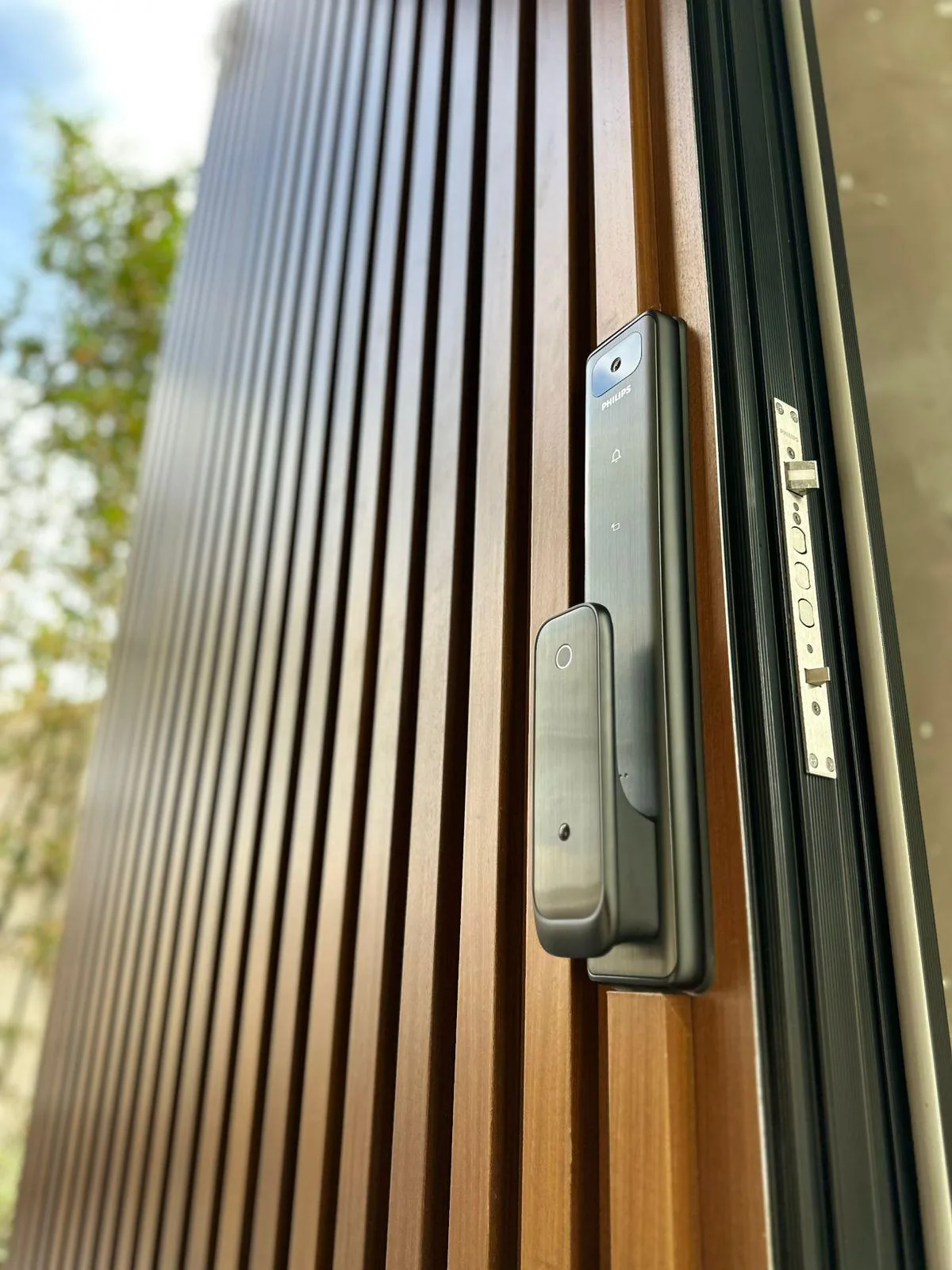
Pivot door production requires far more technical knowledge and engineering than standard door manufacturing. The door weight, dimensions, the mechanism to be used and the installation details must be planned correctly at the very start of the production process. Otherwise the door's performance and service life can be seriously affected.
Pivot doors chosen for modern projects must meet expectations of high durability as well as an aesthetic look. This is why technology and material selection play a critical role in the production process.
The basic stages of the pivot door production process
The production process starts with project analysis. The area where the door will be used, whether it is interior or exterior, the dimensions and the weight are calculated. At this stage the right pivot mechanism is determined and the door leaf is designed accordingly.
Then production begins. Thanks to CNC and laser cutting technologies, door profiles and panels are prepared with millimeter precision. This technology ensures that the door parts fit perfectly and that no problems occur during installation.
The effect of material selection on door performance
The most frequently preferred materials in pivot door production are steel and wood. Thanks to their high strength, steel pivot doors are used especially in exterior and security-oriented projects. Wooden pivot doors, on the other hand, stand out with their natural look and design flexibility.
When choosing materials, the environmental conditions the door will be exposed to must be taken into account. Factors such as moisture, temperature differences and sunlight directly affect the performance of the door.
The advantages of technology-supported production
Thanks to advanced production technologies, pivot doors are produced to the highest level not only aesthetically but also technically. CNC and laser technology minimize dimensional errors while shortening installation time.
Quality checks carried out in modern production facilities also ensure that the door is tested before installation. These checks give the user a trouble-free experience in the long term.
Custom-made pivot door solutions
Not every project fits standard dimensions. That is why custom-made pivot doors provide a great advantage in architectural projects. Door size, cladding type, mechanism capacity and design details can be determined specifically for the project.
This approach ensures that technical requirements are fully met while preserving architectural integrity.
Conclusion
In pivot door production, technology, materials and engineering must be handled as a whole. Correct planning and quality production deliver long-lasting, prestigious door solutions.